
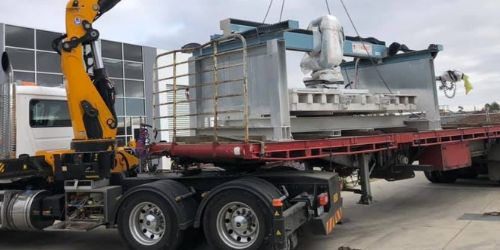
Urban job sites are different.
They are tighter.
Busier.
And they leave less room for error.
In these environments, lifting operations are not just about capacity. They are about precision, coordination, and smart planning.
That is why businesses working on city-based projects need to approach Crane trucks in Melbourne differently compared to open or less restricted sites.
Because in urban conditions, the smallest mistake can create the biggest delay.
Why Urban Projects Require a Different Approach
City projects bring challenges that are not always obvious at first.
These include:
- Limited access roads
- Tight working spaces
- Nearby buildings
- Active pedestrian or traffic areas
- Multiple teams working at the same time
Because of these factors, lifting becomes more than a technical task.
It becomes a coordination challenge.
The Common Mistake: Thinking Only About Capacity
Many project teams focus on one thing:
“How much can the crane lift?”
That matters, but it is not enough.
In urban sites, you also need to consider:
- How the crane will access the site
- Where it will be positioned
- How much space is available for setup
- How often repositioning is required
Ignoring these factors leads to delays and inefficiencies.
Step 1: Evaluate Site Access First
Before selecting equipment, study access.
Ask:
- How wide is the entry point?
- Can the crane enter and exit easily?
- Are there turning limitations?
If access is restricted, the entire operation becomes slower.
Proper access planning saves time before the job even begins.
Step 2: Understand Setup Space Requirements
Crane trucks need space to operate safely.
This includes:
- Stabiliser deployment area
- Safe working radius
- Clearance from obstacles
In tight sites, this space is limited.
So planning the setup area in advance is critical.
Without it, you may face repositioning delays or safety issues.
Step 3: Plan Around Surroundings
Urban sites are rarely isolated.
There may be:
- Adjacent buildings
- Overhead lines
- Parked vehicles
- Pedestrian movement
These factors affect:
- Lift path
- Crane positioning
- Safety measures
Ignoring surroundings can stop work mid-operation.
Step 4: Sequence Lifts to Reduce Movement
Movement takes time.
In tight job sites, unnecessary repositioning can slow everything down.
Instead:
- Plan the lift order carefully
- Group similar lifts together
- Minimise repositioning
This improves efficiency and reduces downtime.
Step 5: Coordinate With Other Teams
Urban projects involve multiple trades.
Without coordination:
- Work overlaps
- Space gets congested
- Delays increase
Clear communication ensures:
- Everyone knows the schedule
- The lift area stays controlled
- Workflow remains smooth
Step 6: Focus on Precision, Not Speed
Speed is important, but precision is critical.
In urban environments:
- Placement space is limited
- Margins for error are small
- Accuracy matters more than speed
A controlled lift prevents rework and saves time overall.
Step 7: Prepare the Site Before Arrival
Preparation reduces pressure.
Before the crane arrives:
- Clear unnecessary obstacles
- Mark lift zones
- Ensure ground stability
- Confirm access paths
Prepared sites allow faster execution.
Unprepared sites cause delays.
Step 8: Build Safety Into the Plan
Urban lifting has higher exposure.
There may be:
- People nearby
- Moving vehicles
- Limited escape space
So safety must be planned early.
This includes:
- Exclusion zones
- Clear communication
- Defined movement paths
Safety protects both the project and the people involved.
Step 9: Avoid Last-Minute Adjustments
Last-minute changes are common in city projects.
But they create risk.
They lead to:
- Confusion
- Delays
- Poor decisions
Instead, confirm everything in advance.
Better planning reduces surprises.
The Real Advantage of Proper Planning
When everything is planned correctly:
- Lifts happen faster
- Coordination improves
- Delays reduce
- Costs stay controlled
This is why experienced teams treat Crane trucks in Melbourne as part of a broader operational plan, not just equipment.
Common Urban Project Mistakes
Avoid these:
- Ignoring site access
- Underestimating space requirements
- Poor coordination
- Unplanned lift sequences
- Last-minute decision-making
Each mistake creates friction.
And friction slows the project.
Final Thoughts
Urban lifting is not about doing more.
It is about doing things right.
When you approach Crane trucks in Melbourne with proper planning, clear communication, and structured execution, the entire process becomes more efficient.
The crane performs the lift.
But planning ensures success.
And in complex job sites, that difference matters the most.
Crane Truck Hire In Melbourne: Better Site Planning
Crane Truck Hire In Melbourne: How Better Site Planning
Crane Truck Hire Melbourne Prices: Why Accurate Project Information Leads to Better Quotes
When businesses compare crane truck hire Melbourne prices, they